Engaging in Knowledge Mobilization
Examples of Evidence
Society of Canadian Ornithologists 2025 Annual Meeting – Saskatoon, SK, Summer 2025
Travelled to Saskatchewan with my Primary Supervisor, Dr. Matthew Reudink, and other members from the BEAC lab at TRU. I attended the conference to develop my research skills, and especially presentation skills. At the conference, I went to the poster sessions and watched talks focused on a wide range of ornithological research topics.
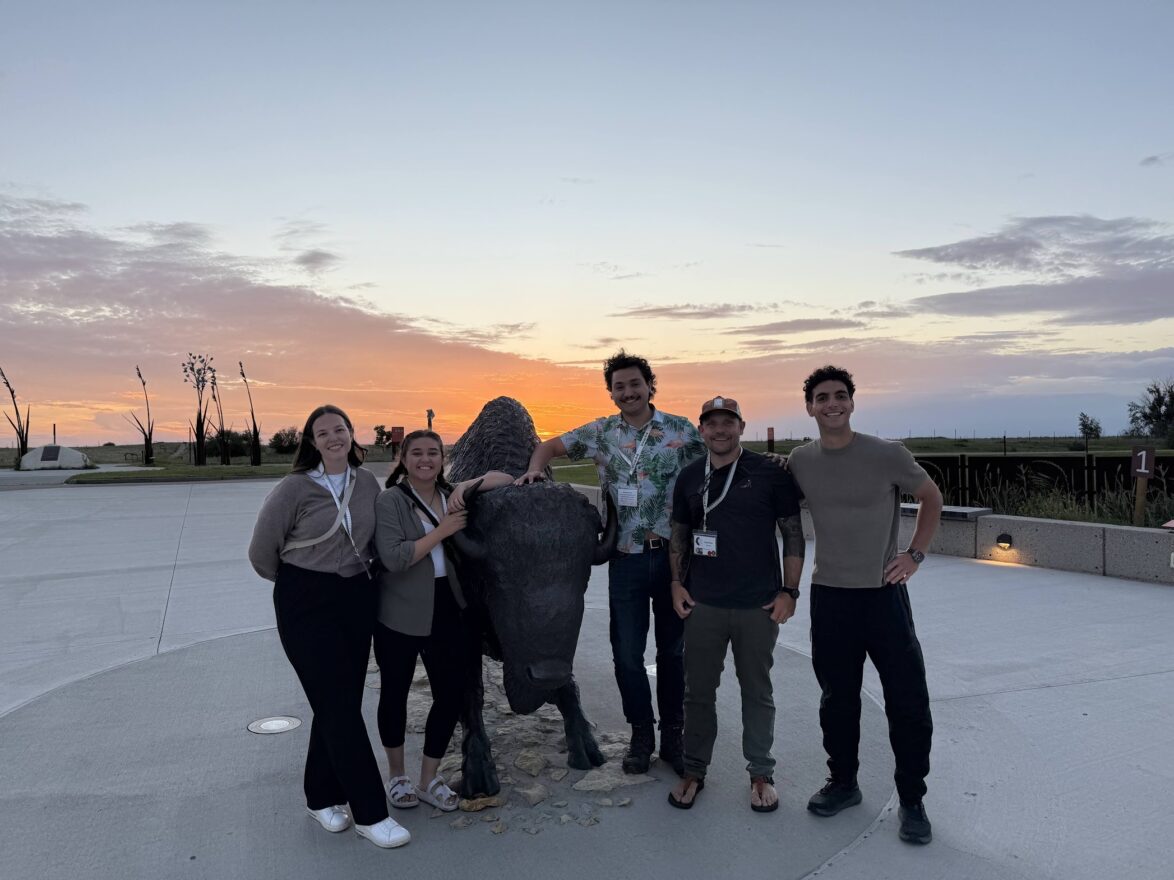
The BEAC Lab at Wanuskewin Heritage Park on the last day of the SCO Conference.
I, Myself (Right) and Dr. Matt Reudink (Beside me to the left).
Honours Presentation on Why My Research Matters (BIOL 4980) – Fall 2025
In this presentation I show my fellow Honours classmates and Honours Seminar instructor Dr. Louis Gosselin, why my research matters. This was a powerful presentation where I had to understand the deeper meaning behind the research I am doing. Through this project I learned that it is vital to keep the big picture in mind whenever I am presenting. That is, if I want people to be engaged in what I am showing them, then I must first show them why it matters.
Cell Physiology Bacterial Transport of Drugs to Brain Presentation (BIOL 3520) – Winter 2025
Reviewed a paper on recent news that bacteria can ship drugs through nose to brain across the blood-brain barrier.
How I contributed:
- Presented slides 1, 7-11, 16-21.
- Primarily discussed the methods and key findings from the paper.
- Explained why this paper was important and what it could mean for the future of drug transportation.
The information from this paper that my co-presenter and I shared with the Cell Physiology class is important and relevant to the area of drug transportation. We decided to review this paper because we felt it would be useful for other classmates to understand what is going on in the world of drug transport to the brain.
Medical Microbiology Zika Virus Presentation (BIOL 3060) – Winter 2025
In this presentation, my classmates and I share a recent discovery in the realm of virology, with the rest of the class. We focused on how the Zika Virus’ stealth transmission to the placenta. We decided to share this with the Medical Microbiology class because the Zika Virus is a deadly disease and understanding its mechanisms of transmission–especially when it comes to pregnant women infected with the virus–could save lives. Until the release of the paper we reviewed in our presentation, scientists did not know how the Zika Virus was transmitted to a fetus baby before birth (as the placenta normally protects the fetus from infection).
How I contributed:
- Presented and created slides for introduction and background (slides 1-8) and part of the discussion (slides 18-20).
Immunology Type 1 Diabetes Presentation (BIOL 3200) – Winter 2025
Globally, diabetes is responsible for ˜ 4million deaths each year. However, many people do not understand the difference between Type 1 diabetes and Type 2 diabetes. My group members and I decided to present on Type 1 diabetes and some of the recent literature surrounding ways to mitigate so our classmates in immunology have a better understanding of what type 1 diabetes is and how it can be managed.
How I contributed:
- Presented and created slides for the introduction and background (slides 1-10).
- Wrote an analysis of two recent studies focused on Type 1 diabetes mitigation alongside my two co-presenters.